Kizomba vs Zouk — They Look the Same Until You Try Them
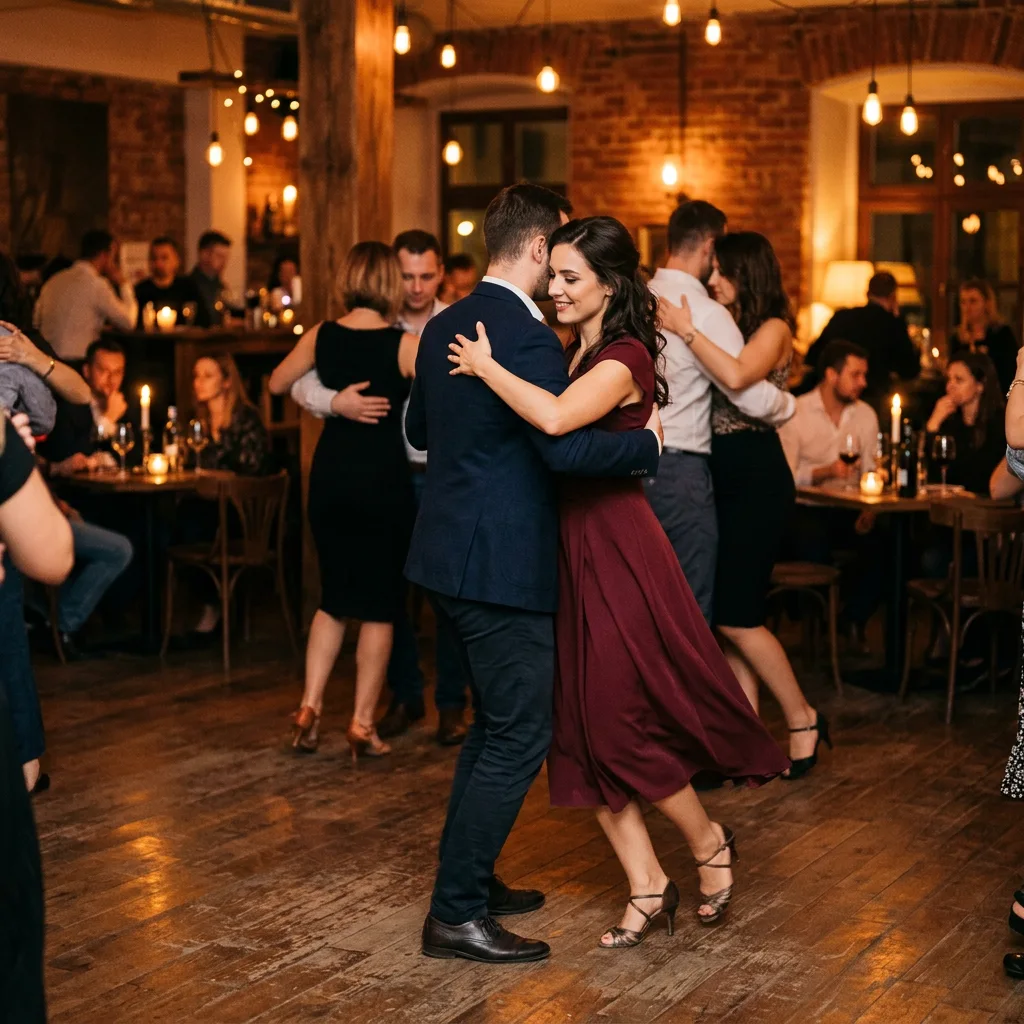
You're at a multi-style social party. A couple moves across the floor — close connection, slow music, fluid body movement. Someone next to you asks: "Is that kizomba or zouk?" Spoiler: the question is harder than it looks. And the answer matters if you're deciding which one to learn.
From the outside, both styles share surface traits: intimate partner connection, slower tempos, sensual energy. Start dancing them — or even watching closely — and the differences become obvious. Different roots, different music, different body mechanics. Comparing kizomba to zouk is like comparing espresso to cold brew — same bean, completely different experience.
Quick Comparison — Kizomba vs Zouk
| Feature | Kizomba | Brazilian Zouk |
|---|---|---|
| Origin | Angola / Portugal | Brazil (evolved from lambada) |
| Music tempo | Slow (80–100 BPM) | Medium to fast (90–130 BPM) |
| Base movement | Walking with partner | Steps + body rolls + head movements |
| Connection | Very close, stable | Close but more dynamic |
| Head movements | Minimal | Key element (cambré, head rolls) |
| Entry difficulty | Lower | Higher (full-body coordination) |
| Time to social dancing | 2–3 months | 4–6 months |
| Big festivals in Poland | Warsaw Kizomba Fest, Exodus Congress | Warsaw Zouk Festival & Marathon |
| Monthly course cost | 180–350 PLN (~EUR 42–81) | 180–350 PLN (~EUR 42–81) |
Kizomba — The Dance That Starts with Walking
Where it comes from
Kizomba was born in Angola in the 1980s, blending African semba with Caribbean influences. The name comes from the Kimbundu word for "party." It developed in Lisbon's Angolan and Cape Verdean diaspora, then spread across Europe. Today it's one of the fastest-growing partner dances worldwide.
What it looks and feels like
Kizomba is fundamentally a walking dance. The leader guides the follower through small, precise steps — forward, back, to the side. Torsos stay in constant connection. There are no spectacular figures or fast spins. The beauty of kizomba is in the subtleties — micro hip movements, syncopations, playing with the music in a small space.
The short answer: if you prefer minimalism and intimacy in dance, kizomba is your style.
The music
Kizomba has its own sound — slow, bass-heavy, electronic. Ghetto zouk and tarraxinha are two sub-genres that dominate at parties. Traditional kizomba (acoustic, with live instruments) plays less often but is valued by purists.
Sub-styles
- Traditional kizomba — Angolan roots, more "African" movement quality
- Urban kiz — newer, more electronic version with sharper isolations
- Tarraxinha — ultra-slow, minimalist form with almost no steps
Brazilian Zouk — The Dance That Uses Your Entire Body
Where it comes from
Brazilian zouk evolved from lambada in the 1990s. When lambada lost mainstream popularity, Brazilian dancers kept the technique but changed the music and added body movement elements. Today, Brazilian zouk is one of the fastest-growing dance styles globally.
What it looks and feels like
Zouk is more dynamic than kizomba — and you see it immediately. Body rolls, cambré (backward head leans), head movements, and fluid transitions between figures. The follower in zouk has significantly more freedom for personal expression than in kizomba.
This is a dance that requires full-body coordination from your first class. Walking isn't enough — you need to simultaneously control hips, torso, and head movement. That's why the learning curve is steeper.
The music
Brazilian zouk is danced to a wide spectrum of music — zouk bass, R&B remixes, pop, neo-soul. The tempo is higher than kizomba, and the beat is more pronounced. Zouk DJs have broad freedom in music selection, which means every party sounds different.
Sub-styles
- Traditional zouk — closer to lambada, more energy, faster tempo
- Neo zouk — slower, more artistic, emphasis on flow and connection
- Zouk flow — intermediate style combining elements of both approaches
Where This Comparison Breaks Down
Here's the thing: asking "which is better, kizomba or zouk?" makes about as much sense as asking "bicycle or kayak?" Both are great — for different things.
Kizomba won't work well if you:
- Want a dynamic, visually striking dance
- Love lots of figures and spins
- Prefer faster music
Zouk won't work well if you:
- Have neck or cervical spine issues (head movements are central)
- Prefer minimalism and simplicity
- Want to start dancing socially fast (zouk has a longer ramp-up)
The Polish Scene — Where to Dance Each in 2026
Kizomba in Poland
Poland's kizomba scene centers on three cities:
- Warsaw — Warsaw Genesis Kizomba Festival, Warsaw Kizomba Festival, regular social parties
- Wrocław — Exodus Kizomba Congress (one of the largest in Eastern Europe)
- Kraków — smaller scene but active schools
More on kizomba → Kizomba Events and Festivals in Poland
Zouk in Poland
Zouk has been growing in Poland for over a decade, with Warsaw as its epicenter:
- Warsaw — Warsaw Zouk Festival & Marathon (13th edition in February 2026, one of Europe's oldest), regular social parties
- Katowice — KZM Katowice Zouk Meetup (March 2026), Silesian Zouk Festival (November 2026)
- Wrocław — Wrocław Zouk Experience (April 2026)
More on zouk → Zouk Festivals in Poland
Cost Comparison
| Item | Kizomba | Zouk |
|---|---|---|
| Monthly course (4–8 classes) | 180–350 PLN (~EUR 42–81) | 180–350 PLN (~EUR 42–81) |
| Weekend workshop | 100–250 PLN (~EUR 23–58) | 100–250 PLN (~EUR 23–58) |
| Festival full pass | 300–600 PLN (~EUR 70–139) | 300–600 PLN (~EUR 70–139) |
| Dance shoes | From 200 PLN (~EUR 46) | From 200 PLN (~EUR 46) |
| Time to social dancing | 2–3 months | 4–6 months |
Costs are virtually identical. The only real difference — zouk requires more time before you feel comfortable at social parties. Kizomba lets you start social dancing sooner because the base step is simpler.
How to Choose — A Practical Framework
- Go to a multi-style social party — watch both dances live
- Take one trial class in each — most Polish schools offer free or cheap trial lessons
- Check which music resonates — search kizomba and zouk playlists on Spotify
- Assess your patience — if you want quick social dancing, pick kizomba. If you don't mind a longer learning phase, zouk
- Check your city's offerings — some cities make it easier to find one style than the other
The most common path in Poland: Start with bachata or salsa, then add kizomba, then possibly zouk. But increasingly, people are starting directly with kizomba or zouk, especially in Warsaw and Wrocław.
Related Guides
- Kizomba Events in Poland →
- Zouk Festivals in Poland →
- Dance Events in Poland — Complete Guide →
- Best Cities for Dance in Poland 2026 →
Article based on observations of the Polish dance scene. Last updated: March 26, 2026.